


Laser Cutting for Medical Electrode Pads
Precision Patterning on PET Substrates
Overview
Medical electrode pads require high‑precision patterning to ensure consistent signal transmission, patient comfort, and manufacturing scalability. Traditional die‑cutting methods often introduce burrs, inconsistent edges, and material deformation — compromising both performance and yield.
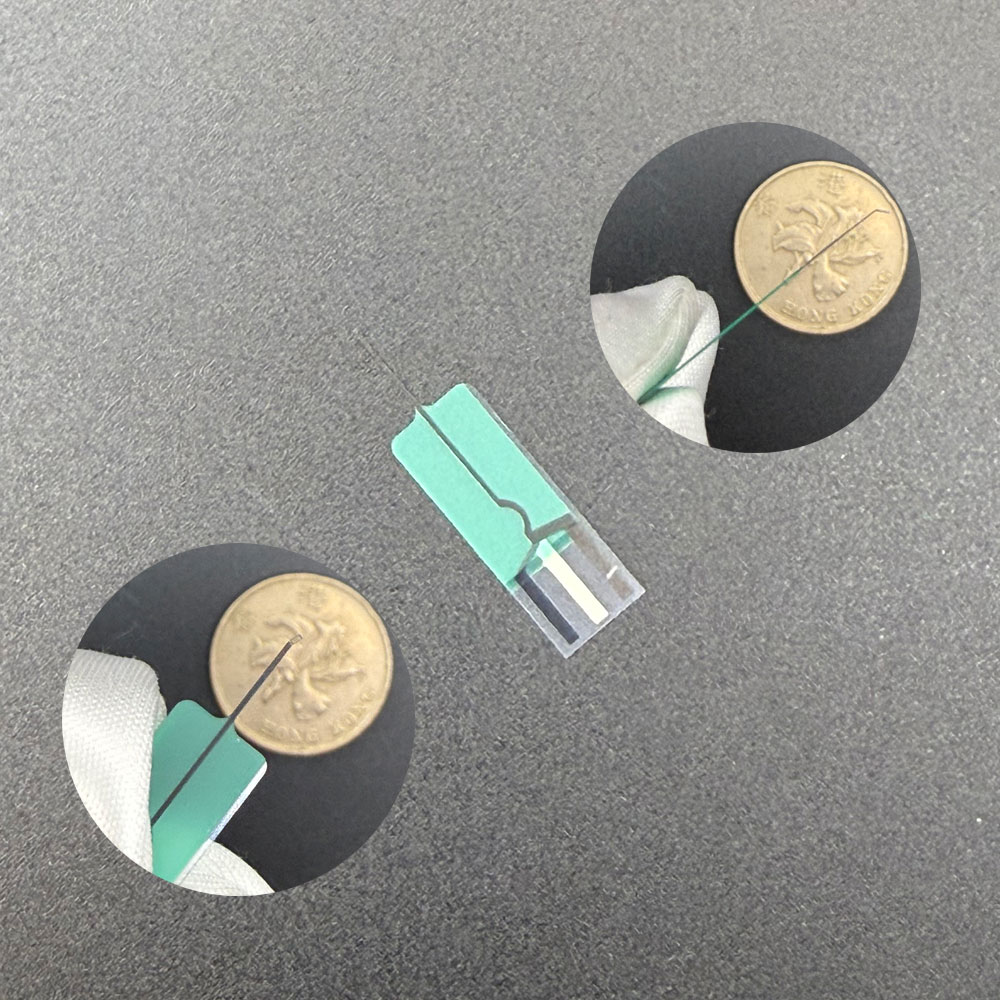
At YMJ Optical, we utilize advanced laser cutting technology to deliver clean, burr‑free electrode pad features on PET (polyethylene terephthalate) substrates, with the capability for multi‑layer cutting to improve production efficiency.
Case Example: Medical Electrode Pad Cutting
| Parameter | Specification |
|---|---|
| Material | PET (polyethylene terephthalate) |
| Aperture Diameter | 0.1 mm |
| Edge Quality | Burr‑free, clean cut, no thermal deformation |
| Cutting Capability | Multi‑layer cutting supported |
| Application | Medical electrodes for ECG, EEG, TENS, and wearable monitoring devices |
Key Advantages
1. Ultra‑Fine Aperture Cutting
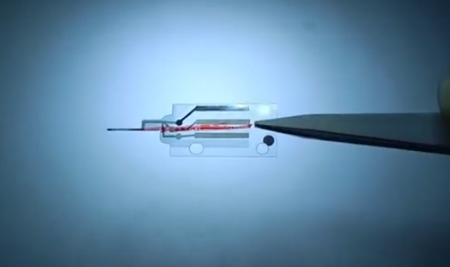
With the ability to machine 0.1 mm diameter apertures with exceptional repeatability, YMJ Optical
enables high‑density electrode patterns that enhance signal accuracy and spatial resolution.
2. Burr‑Free, Clean Edges
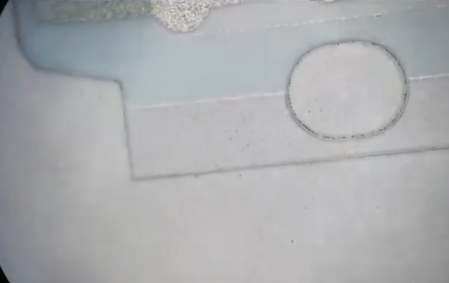
Laser processing eliminates mechanical burrs and edge irregularities commonly associated with die‑cutting. The result is smooth, contamination‑free edges — critical for patient comfort and reliable electrical contact.
3. Multi‑Layer Cutting Capability
To maximize throughput, our laser systems can simultaneously cut multiple stacked PET layers without compromising edge quality or dimensional accuracy. This significantly reduces processing time and unit cost for high‑volume production.
4. Minimal Heat‑Affected Zone (HAZ)
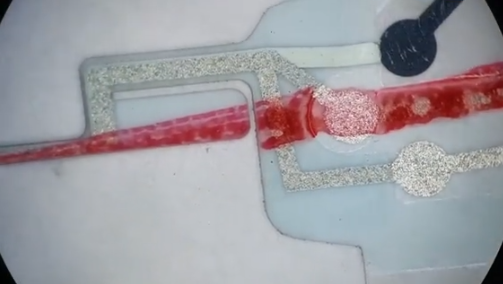
Our optimized laser parameters ensure minimal thermal impact, preserving the mechanical and electrical properties of the PET substrate. No melting, charring, or delamination occurs at the cut edge.
Technical Specifications
| Parameter | Capability |
|---|---|
| Material Thickness | 0.05 mm – 0.5 mm (PET and similar films) |
| Minimum Aperture Diameter | ≥ 0.05 mm (0.1 mm demonstrated in this case) |
| Cutting Tolerance | ± 20 μm |
| Multi‑Layer Capacity | Up to 5 layers (depending on total thickness) |
| Processing Format | Sheet‑to‑sheet or roll‑to‑roll compatible |
Why Laser Cutting for Medical Electrodes?
| Challenge | Traditional Die‑Cutting | YMJ Laser Cutting |
|---|---|---|
| Edge Quality | Burrs, rough edges | Burr‑free, smooth |
| Material Deformation | Stretching, tearing | No mechanical stress |
| Aperture Size Limitation | Limited to punch size | Down to 0.05 mm |
| Tooling Cost | High upfront tooling cost | No tooling required |
| Design Flexibility | Fixed pattern | Rapid design iteration |
| Multi‑Layer Processing | Not feasible | Supported |
Applications in Medical Devices
ECG / EKG electrodes — Dry and wet electrode configurations
EEG headset electrodes — High‑density arrays
TENS / EMS therapy pads — Wearable therapeutic devices
Remote patient monitoring patches — Disposable and reusable formats
Neuromodulation device interfaces
