


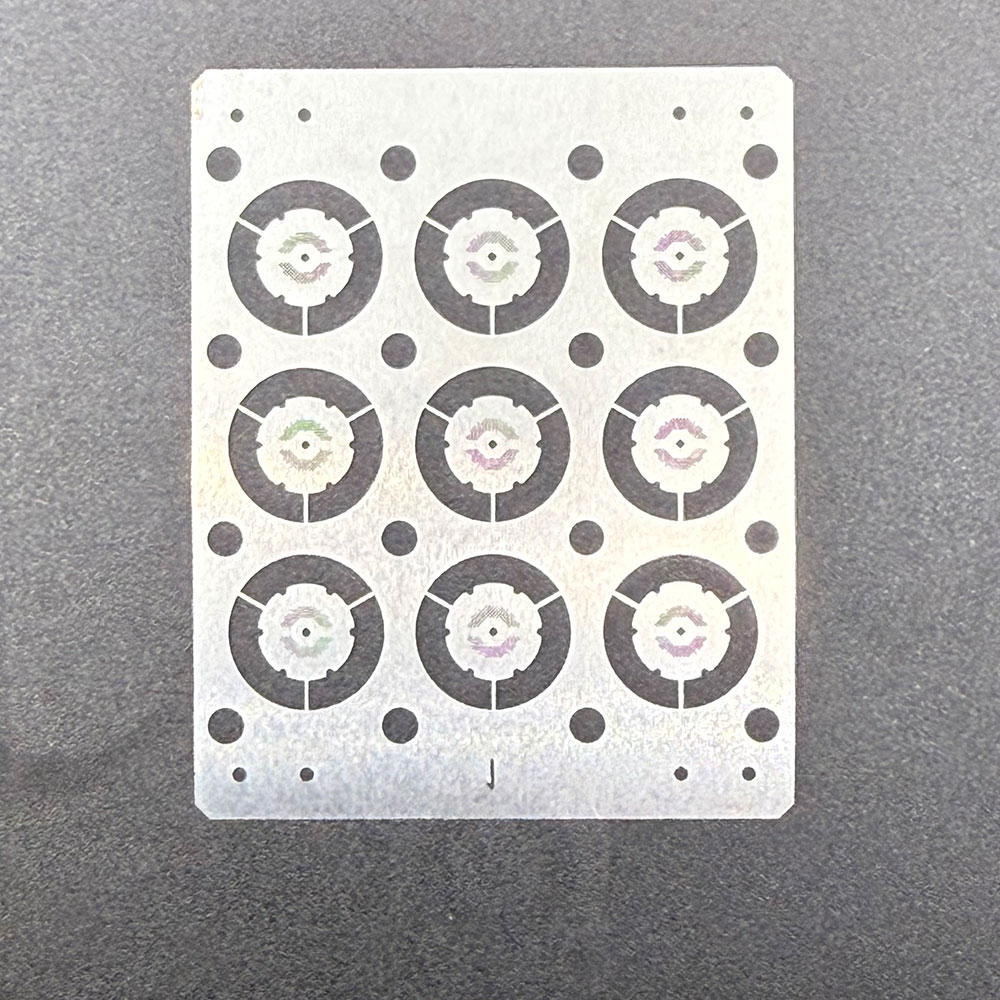

Stainless Steel Shadow Stencils Inspection Templates
SMT inspection templates are essential tools for visual inspection of assembled printed circuit boards (PCBs). During the inspection process, the template is placed directly over the assembled board, allowing operators to focus on specific locations and quickly identify missing or misaligned SMT (Surface Mount Technology) and PHT (Plated Through‑Hole) components.
At YMJ Optical, we manufacture high‑precision SMT inspection templates using advanced laser cutting technology. Our templates are available in a variety of materials and thicknesses, with accurate openings designed from your PCB Gerber files.
Key Features
| Feature | Description |
|---|---|
| Manufacturing Process | High‑precision laser cutting |
| Materials | Stainless steel (primary), other metals available |
| Thickness Range | 0.002″ – 0.020″ (0.05 mm – 0.50 mm) |
| Openings | Accurate, burr‑free, custom‑designed from Gerber files |
| Markings | Polarity markings and text (e.g., reference designators) can be engraved or half‑etched |
| Lead Time | Fast turnaround from Gerber submission |
What an SMT Inspection Template Does
Placing an inspection template over an assembled PCB helps your production line:
✅ Catch wrong or missing parts early in the production cycle
✅ Guide the inspector's eyes to selected areas only
✅ Speed up inspection significantly compared to unguided visual checks
✅ Reduce new hire training time – intuitive overlay process
✅ Improve accuracy – highly repeatable, cost‑effective, and safe
✅ Reduce scrapped parts – catch defects before reflow or final test
Faster and More Accurate Than Visual Inspection
Manual visual inspection of populated PCBs is:
Slow – inspectors must scan the entire board
Inconsistent – fatigue leads to missed defects
Training‑intensive – new operators require weeks to become reliable
YMJ Optical's laser‑cut SMT inspection templates solve these problems by:
Restricting the inspector's view to specific component locations
Providing clear polarity markings and reference designators directly on the template
Enabling consistent pass/fail criteria across all inspectors and shifts
